
How Do I Know If My Home Has Water Damage Behind the Walls? Signs Portland-Area Homeowners Shouldn't Ignore.
CONTACT USIf you live in the portland area, you already know the amount of rain we get.
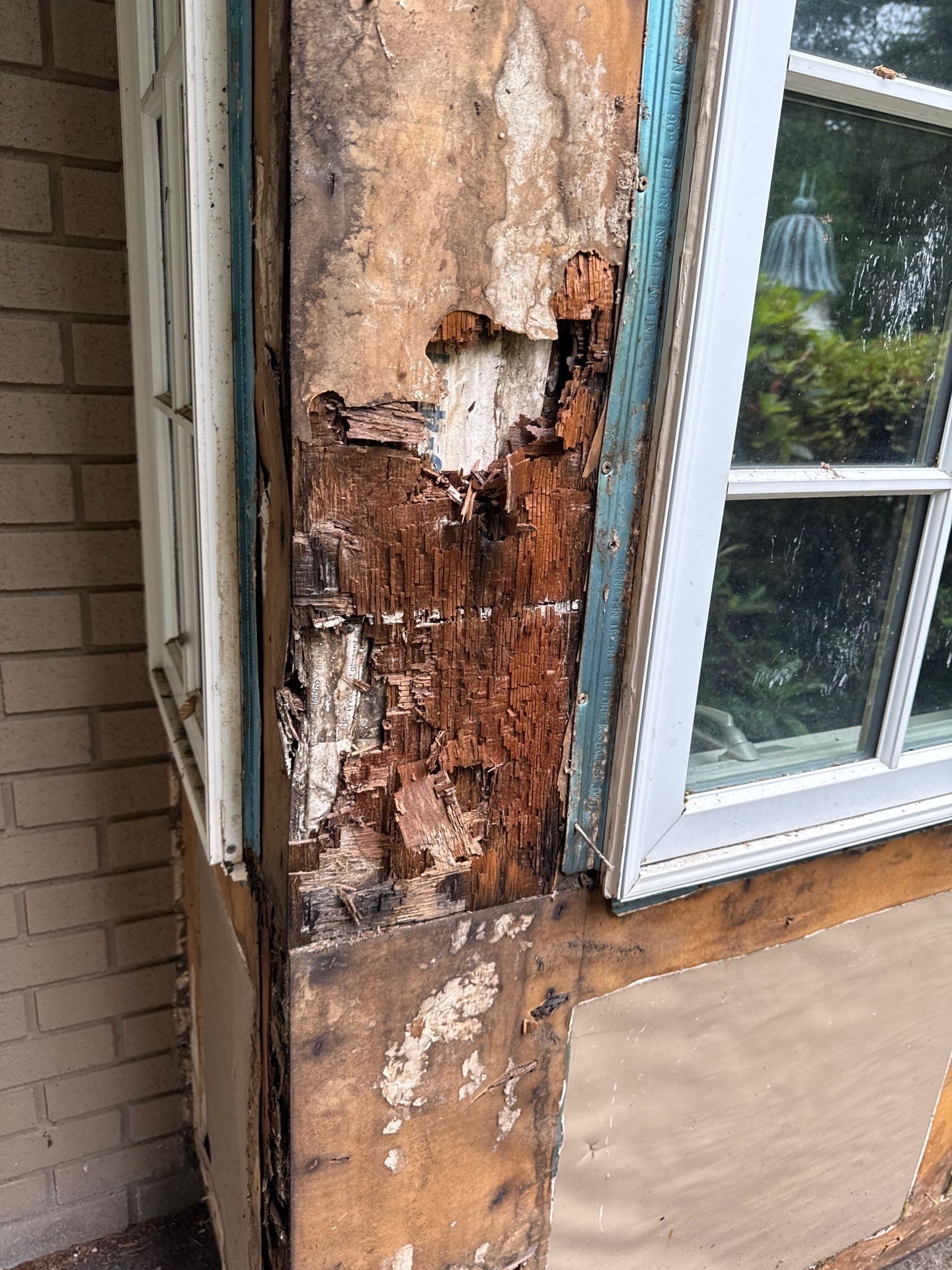
Yes, water damage can exist behind your walls without an obvious leak. Signs can include staining, musty odors, soft or deteriorated wood, peeling paint, damaged siding, and problems around windows or doors. In Portland-area homes, moisture intrusion can come from failed flashing, siding, roofing, windows, drainage or other building-envelope issues. The important step is finding where the water is coming from—not just replacing the damaged material.What you may not consider is how much that rain can be affecting your home long before you ever see an obvious leak.
A little discoloration around a window. Soft siding. Paint that keeps cracking. A door that suddenly doesn't seem to fit quite right.
Sometimes those things are nothing.
Sometimes they are the first clues that water has found its way somewhere it shouldn't be.
At Cascade NW Construction, this is something we see often. And when we're called to do repair rot, replace windows, remodel a bathroom, or open up a wall during a larger renovation, we're not just looking at the finished surface.
We're looking at why the problem happened in the first place.
Because replacing the damaged material without addressing the source of the water doesn't really solve the problem.
What Are the Signs of Water Damage Behind a Wall?
Water damage isn't always dramatic.
You may not have a puddle on the floor or water pouring through the ceiling. In fact, some of the more expensive problems start with very subtle signs.
Here are a few things worth paying attention to:
1. Soft or Spongy Siding
If a section of siding feels softer than the surrounding areas, there could be moisture behind it.
Rot can develop in sheathing, framing and other components behind the exterior finish. By the time the damage is obvious from the outside, the problem may be considerably larger than the small area you originally noticed.
2. Rot Around Windows
Windows are one of the areas we pay very close attention to in Oregon homes. A window isn't simply a hole in the wall with a frame installed inside it. The surrounding flashing, weather-resistant barrier, drainage paths and installation details should work together to keep water moving away from your home.
When those details aren't done correctly, or if they have failed over time—water can get into the wall assembly. And that's where things can get interesting. The outside of the window may look acceptable while damage is developing behind the trim or siding.
3. Peeling Paint or Repeated Cracking
If you keep repairing the same area and the problem keeps coming back, stop and ask why. Paint doesn't normally decide to peel for no reason.
Repeated cracking, bubbling, staining or deterioration can sometimes be a clue that moisture is getting into the assembly. The important word here is sometimes. We don't believe every cracked piece of paint means your house has a major problem. The goal is to investigate rather than assume.
4. A Musty Smell
A musty smell doesn't automatically mean you have serious water damage either. But if you notice a persistent odor in an area that has historically had moisture exposure, it's worth paying attention to. Especially if the smell is accompanied by staining, soft materials, deteriorated trim or other changes.
5. Windows, Doors or Trim That Suddenly Don't Look Right
Sometimes homeowners notice that a door isn't operating like it used to. Or a window sticks. Or trim seems to be separating. Again, there can be many reasons for these things. But when several symptoms show up together, it is worth looking at the bigger picture rather than fixing each symptom independently.
Why Portland-Area Homes Can Be Especially Vulnerable
Oregon homes have to deal with a lot of moisture. Rain, wind-driven water, temperature changes and years of weather exposure can put a tremendous amount of stress on the exterior of a home.
That's why your home's building envelope matters.
The building envelope is essentially the system that separates your living space from the outside environment—your roof, walls, siding, windows, doors, flashing and the layers that help control water and moisture.
When that system works correctly, water has a path away from the structure.
When something is installed incorrectly, deteriorates or fails, water can sometimes find a path into places you can't see.
Cascade NW works on building-envelope repairs throughout the Portland metro and surrounding areas, including investigation and repair of moisture-related problems.
Here's Where Remodeling Can Reveal a Lot
This is one reason we tell homeowners that remodeling isn't always just about what you see in the finished room.
Let's say you're remodeling a bathroom. You may be thinking about the shower, tile, vanity, lighting and flooring. We're thinking about those things too. But we're also thinking about:
- What's behind the walls?
- How old is the plumbing?
- Is there evidence of previous leaks?
- Is the framing sound?
- Is there rot?
- Is the window properly protected from water?
- Is the shower waterproofing being installed correctly?
- Are there ventilation issues?
- Are there structural changes that need to be addressed?
- Are we fixing the original problem or simply covering it up?
That's the difference between making something look new and actually building it correctly.
What Happens If You Find Rot During a Remodel?
This is where homeowners sometimes get nervous. And we understand why. Nobody wants to hear, "We opened the wall and found something we weren't expecting." But finding a problem isn't necessarily the bad news.
Not knowing about the problem is worse.
If damaged framing or sheathing is discovered, the next step should be determining what caused the damage, how extensive it is and what needs to be repaired.
The goal isn't to make the problem sound bigger than it is. The goal is to understand it. Sometimes the repair is relatively straightforward. Sometimes the damage is more extensive. And sometimes what looks like a simple repair from the outside turns into a much bigger investigation once the layers are removed. That's why experience matters.
Don't Just Replace the Damaged Part
One of the biggest mistakes we see is treating the symptom instead of the cause. If a piece of siding is rotten, you can replace the siding. But why did it rot? If a window has leaked, you can replace the window. But why did the water get into the wall? If drywall is stained, you can replace the drywall. But where did the water come from?
Those questions matter.
We are particularly focused on getting to the root of the problem. Our work includes remodels, additions, windows and doors, rot repairs, structural repairs and building-envelope work because these areas of a home are often connected.
What Should You Do If You Suspect Water Damage?
Don't panic. And don't start tearing into your walls yourself just because you found a suspicious spot.
Start by documenting what you're seeing. Take photographs. Write down when you first noticed it. Look for patterns. Does it get worse after heavy rain? Is it always around the same window? Is there staining below a plumbing fixture? Has the same area been repaired before? Those details can be surprisingly helpful.Then have the area evaluated by someone who understands not only remodeling, but also how homes are put together and how moisture is supposed to move through—or stay out of—the building envelope.
The Bigger Picture: Your Home Is a System
This is really the way we look at every project. Your house isn't a collection of individual rooms and products. It's a system.
The roof connects to the walls.
The walls connect to the windows.
The windows connect to the flashing and weather barrier.
The plumbing runs through the structure.
The bathroom connects to the framing, ventilation and waterproofing.
And all of those things have to work together.
That's why we don't believe in simply making something look good and hoping it lasts.
We want to know why it failed, fix it correctly, and build it so you aren't dealing with the same problem again.
Have a Portland-Area Home Showing Signs of Moisture or Rot?
If you're in Portland, Oregon City, West Linn, Wilsonville, Lake Oswego, Clackamas County, Newberg, or surrounding communities and you're seeing signs that something may be happening behind your walls, siding or windows, we'd be happy to take a look.
You don't necessarily need to know exactly what the problem is before you call.
That's part of what we're here for. Sometimes you simply need someone experienced to look at the situation and help you understand what you're actually dealing with and what your options are.
And if you're already planning a kitchen, bathroom, addition or larger remodel, that's even more reason to look beyond the finishes. Because what's behind the walls matters just as much as what you see when the project is finished.
Cascade NW Construction
Building correctly. Building for longevity. Building homes for the years ahead.
Serving the Portland metro area, Clackamas County, Oregon City, West Linn, Wilsonville, Lake Oswego, Newberg and surrounding Oregon communities.